
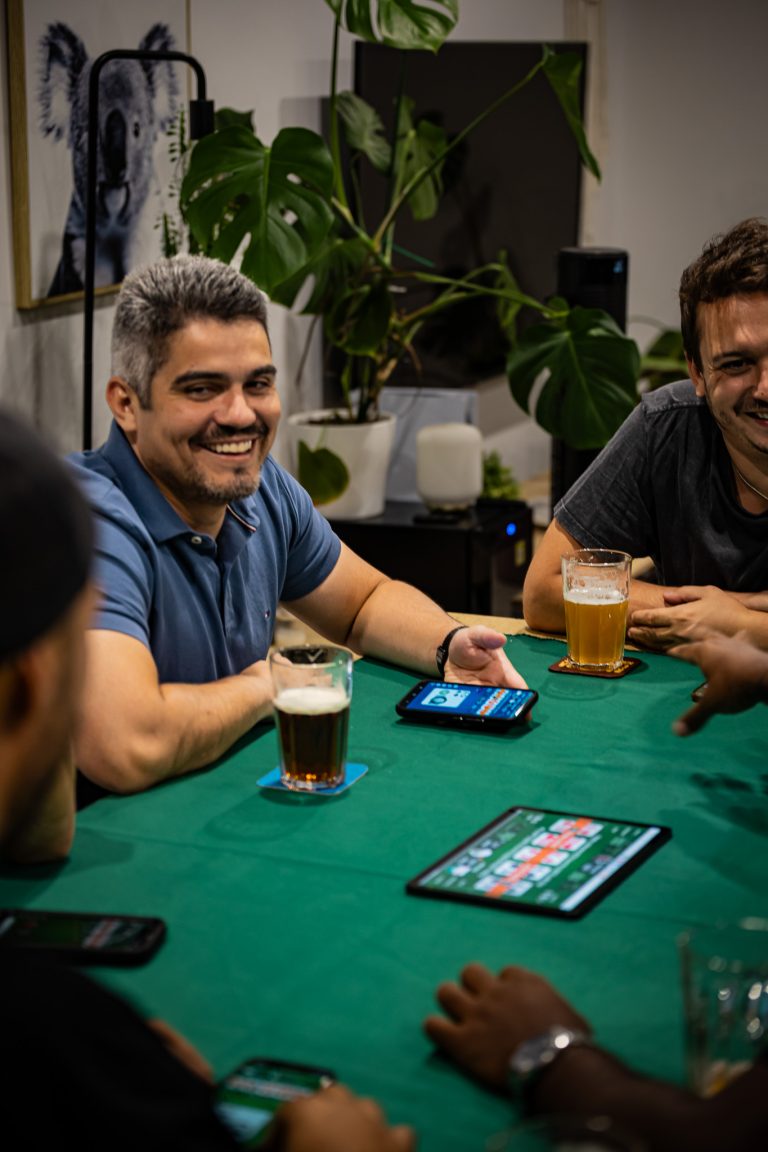
There’s a version of poker night that runs itself. The right people show up, the chips land in the right places, the music’s good, the food doesn’t slow anyone down, and at midnight everyone’s arguing about a hand from two hours ago. There’s another version where you spend twenty minutes counting out chip stacks while half the room is on their phones, the buy-in conversation gets weird, and someone leaves at 9:30pm because the cards are going slow.
The difference is almost never the players. It’s the setup.
This is the checklist I wish someone had handed me when I started hosting. Some of it’s obvious. Some of it isn’t. All of it is stuff that, when you get it right, nobody notices — which is exactly the goal.
Pick the night first, the players second
The most common hosting mistake is sending a group text that says “poker this weekend?” and trying to make whoever’s available work. You end up with three players, or seven players who can only stay until 10pm. Neither makes a good game.
Pick a date and time that suits you, send it out, and let people opt in. A Friday night that runs from 7:30pm until you’re done is almost always better than a Saturday afternoon that’s competing with kids’ birthday parties and grocery runs. Six players is a great number. Eight is the sweet spot for most home games. Anything more than nine and you’re running a tournament whether you wanted to or not.
If a regular doesn’t reply, follow up once and then move on. The host who chases RSVPs ends up resenting the group.
Decide the stakes before anyone arrives
This is the single biggest thing that separates a good poker night from an awkward one.
Stakes need to do two things: be high enough that people actually care about their decisions, and low enough that nobody at the table is uncomfortable. The number that satisfies both depends entirely on your group. A $20 buy-in for a group of friends in their twenties feels meaningful. The same $20 in a group where someone just bought a house and someone else is between jobs is going to feel different to each of them.
The fix is to ask before the night. Either pick a buy-in and put it in the invite (“$50 buy-in, no rebuys for the first hour”) or float two options and let the group pick. What you don’t want is a debate about stakes while six people stand around your kitchen.
A few rules of thumb that work for most home games:
- The buy-in should be an amount everyone could lose twice without it ruining their week.
- If the group is mixed-experience, lean lower rather than higher. Beginners losing a meaningful amount on their first night don’t come back.
- Decide upfront whether rebuys are allowed and for how long. “Rebuys until the first break, then we play down” is clean and easy.
Sort out the table before people arrive
You need somewhere everyone can sit, see the action, and reach the pot. A round dining table is ideal. A rectangular one works for up to six. A coffee table doesn’t work for anyone — your back will hate you by hand thirty.
If the chairs are mismatched, that’s fine. If anyone’s stuck on a stool while everyone else is on a proper chair, that’s a problem.
Lighting matters more than people think. Overhead light good enough to read cards by, but not so bright it feels like an interrogation. A lamp in the corner is better than the main ceiling light.
If you’re using the Smart Dealer Poker app, the shared screen — tablet, laptop, or TV — needs to sit somewhere the whole table can see it. The middle of the table is ideal if it fits. A TV on the wall behind you works if the table can swivel a bit. The phones-as-hands part takes care of itself.
The snacks question
Three rules and you’re set:
Nothing greasy. Pizza, hot wings, anything that leaves residue on fingers — fine for a movie night, brutal for a poker night, especially if you’re still using physical cards. The app sidesteps this since nobody’s touching cards, but greasy hands plus phone screens is its own ordeal.
Nothing that requires utensils. If your friends need a knife and fork, they’re not playing. Finger food only. Cheese boards, charcuterie, pretzels, nuts, chips and dip, sliders. Stuff people can grab without thinking.
Order it, don’t cook it. You’re hosting, not catering. If you want to put together a board, do it before anyone arrives so you’re not in the kitchen during hand fifteen. If you’re ordering in, put the order in early — the kitchen’s open at hour one, closed by hour three so the food doesn’t sit out forever.
On drinks: have water visible at all times. Not because anyone’s worried about hydration but because most home games trend boozy and the hosts who keep water on the table run later, healthier nights with fewer regrets in the morning.
Set the tone in the first ten minutes
The opening of a poker night sets the whole evening. If the first hand starts with confusion about blinds, the night feels chaotic. If the first hand starts smoothly, everything that follows feels easy.
A few things to nail in the first ten minutes:
- Confirm the stakes and structure out loud once, even if you sent it in the invite. “Twenty dollar buy-in, blinds five-ten, rebuys until the first break.”
- If you’re using the app, get everyone joined and sat before you start the first hand. Anyone fiddling with their phone during hand one is not paying attention to hand one.
- Decide on phones at the table. The honest answer is “phones are fine, just don’t tank the action.” Everyone has a phone. Pretending otherwise is a losing battle.
House rules that actually matter
You don’t need a printed rulebook. You do need to have a quick answer for the three or four things that come up every game:
String bets. Either you call them or you don’t. Most home games don’t, and that’s fine — just be consistent. With the app, this is moot.
Splash the pot, angle shooting, slow-rolling. Most groups handle these socially (“come on, dude”) and that works fine. With the app, again, mostly handled.
What happens if someone has to leave early. The cleanest answer: they cash out their chips at face value, and the night carries on. Don’t try to redistribute their stack. Don’t let them play a “last hand” that turns into six.
What happens at the end of the night. Decide before you start: do you play a hard stop time, last hand at midnight, or play until someone busts? Each works, but pick one. Games that drift to 3am with no plan tend to end badly.
The setup the app handles for you
Worth saying explicitly because it’s the whole reason Smart Dealer exists: when you use the app, a big chunk of this checklist becomes irrelevant.
You don’t need a chip set. You don’t need to count starting stacks. You don’t need to remember the blind structure or set a timer on your phone. You don’t need to deal, shuffle, manage side pots, or argue about whether someone said “raise” or “call.” The app does all of it. The shared screen shows the table; each player’s phone is their hand. You set the buy-in, blinds, and structure once, and you’re playing.
What you still need: people, somewhere to sit, food, and a reason to be there.
A short version of all of the above
If you only remember five things:
- Pick the date, send the invite, don’t chase.
- Set the stakes in the invite, not at the table.
- Round dining table, mixed seating fine, lighting not too bright.
- Finger food only, water always visible.
- Confirm the structure out loud before hand one.
Get those five right and the night runs itself. The rest is just poker.
Hosting your first game with the app? Here’s our step-by-step guide to setting up and inviting friends.